How Digital Inventory Management Connects Procurement, Pharmacy, Laboratory and Billing
Introduction
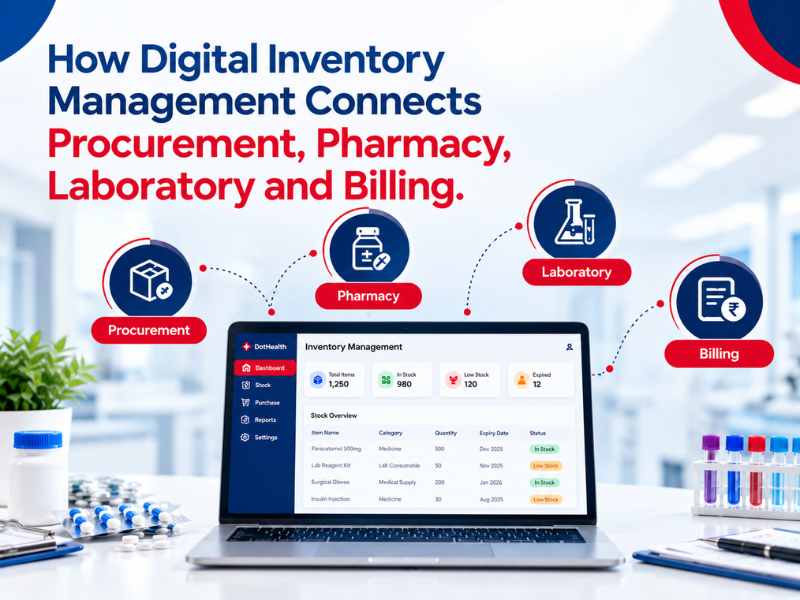
Healthcare organizations manage a large variety of medicines, laboratory reagents, consumables, medical supplies and other inventory items. When procurement, inventory, pharmacy, laboratory and billing activities are handled separately, maintaining accurate stock information can become difficult.
Digital inventory management brings these activities together by creating a connected flow of information—from purchasing an item to receiving, storing, issuing, using and billing it.
Modern inventory management software can provide real-time stock visibility, purchase tracking, batch and expiry management, multi-location control and reporting.
1. Connecting Procurement With Inventory Management
Procurement is the starting point of an efficient inventory workflow.
A digital inventory system can help healthcare organizations manage:
- Purchase orders
- Supplier information
- Purchased items
- Stock receipts
- Purchase returns
- Item quantities and rates
- Batch information
- Inventory availability
Instead of maintaining separate records, procurement and inventory teams can work with the same digital stock information.
This makes it easier to understand what has been purchased, what has been received and what is currently available.
Pharmacy departments depend heavily on accurate inventory information. Medicines need to be tracked by quantity, batch and expiry date.
Pharmacy Management Software can connect pharmacy transactions with inventory so that stock information is updated as medicines are purchased, sold, returned or transferred.
This can help pharmacy teams:
- Monitor real-time stock
- Track batches and expiry dates
- Identify low-stock items
- Manage purchases and returns
- Improve billing workflows
- Generate sales and purchase reports
DotHealth Pharmacy specifically highlights real-time inventory control, batch and expiry tracking, automated alerts and inventory reporting.
3. Connecting Laboratory Inventory With LIMS
Inventory is not limited to medicines. Laboratories also depend on reagents, consumables and other testing-related resources.
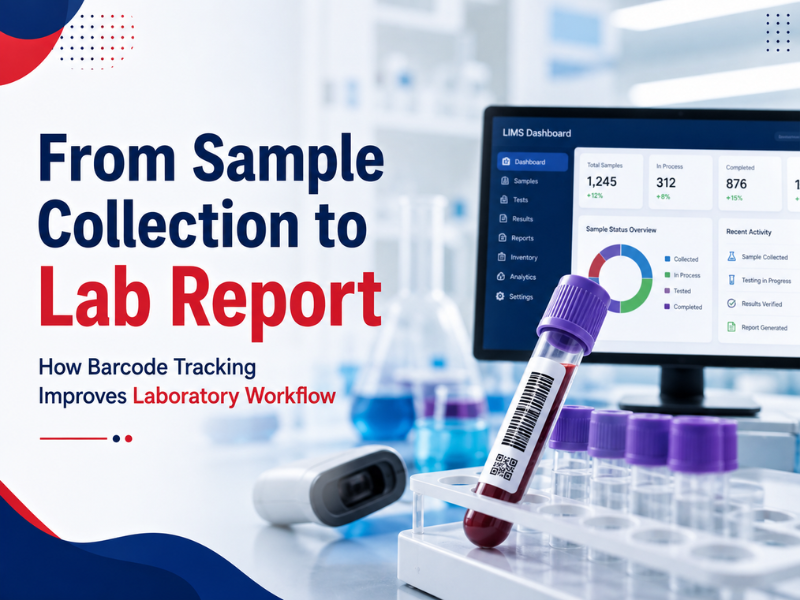
When LIMS Software and inventory management work together, laboratories can maintain better visibility into the resources used during testing.
For example, the workflow can connect:
Sample Registration → Testing → Reagent/Consumable Usage → Inventory Update → Result → Report
Barcode-based LIMS workflows can also connect samples with resource usage and provide better traceability.
This gives laboratory managers better information for planning purchases and monitoring consumption.
In hospitals, inventory can be used across multiple departments such as OPD, IPD, pharmacy, laboratories and other service areas.
A Hospital Management System (HIMS) with integrated inventory can help centralize this information.
For example:
Patient Service → Item/Medicine Usage → Stock Update → Billing
This reduces the need to maintain completely separate records for different departments.
DotHealth HIMS is designed to integrate patient management, billing, inventory and departmental workflows through centralized healthcare management.
Billing is another important part of the inventory workflow.
When items or medicines are issued as part of a healthcare service, the corresponding inventory transaction can be connected with billing.
This creates a more organized flow:
Inventory Item → Usage/Issue → Billing → Stock Update → Report
Such integration can reduce repetitive data entry and make it easier for administrators to compare stock movement with billing records.
It also provides better visibility into purchases, sales, returns and inventory-related financial information.
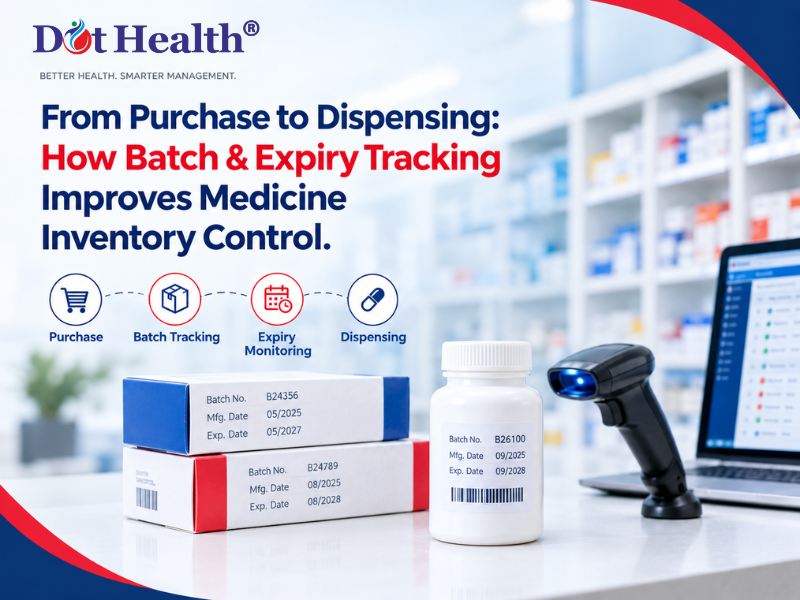
6. Better Control Through Batch and Expiry Tracking
Healthcare inventory often includes products with specific batch numbers and expiry dates.
Digital inventory management can maintain these details and help teams identify items approaching expiry. DotHealth's inventory solution includes batch and expiry tracking as part of its inventory controls.
This is particularly useful for:
- Medicines
- Laboratory reagents
- Consumables
- Medical supplies
Better visibility can help organizations plan stock movement and reduce unnecessary inventory wastage.
7. Real-Time Inventory Visibility Across Departments
One of the biggest advantages of digital inventory management is centralized visibility
.
Instead of asking different departments for separate stock reports, administrators can view inventory information through a unified system.
This can support better decisions regarding:
- What needs to be purchased
- Which items are available
- Which items are running low
- Which products are nearing expiry
- Where inventory is being consumed
- Which departments require additional stock
For organizations operating multiple locations, centralized inventory management can also provide visibility across warehouses or branches.
8. Why Integrated Inventory Management Matters
Connecting procurement, pharmacy, laboratory and billing creates a more complete healthcare workflow.
The major benefits include:
- Better stock visibility
- Simplified procurement
- Improved pharmacy inventory control
- Better laboratory resource tracking
- Reduced repetitive data entry
- Improved billing coordination
- Better batch and expiry management
- Centralized reporting
- Improved decision-making
Rather than treating inventory as a separate administrative task, healthcare organizations can make it part of their complete digital workflow.
How DotHealth Supports Connected Healthcare Operations
DotHealth brings together Inventory, Pharmacy, LIMS, HIMS, Clinic and other healthcare workflows within its broader healthcare software ecosystem. Its platform emphasizes connectivity between laboratories, clinics, pharmacies and administrative operations.
With connected Healthcare Inventory Management, organizations can manage procurement, stock, pharmacy operations, laboratory resources and billing more efficiently while gaining better visibility into day-to-day operations.
Conclusion
Digital inventory management is no longer limited to counting stock. In modern healthcare, it can connect procurement, pharmacy, laboratory, HIMS and billing into a coordinated workflow.
With the right Inventory Management Software, healthcare organizations can improve stock visibility, simplify purchasing, manage pharmacy and laboratory resources, and connect inventory activity with billing and reporting.
For healthcare providers looking to build a more connected digital ecosystem, integrating inventory with other healthcare management systems can be an important step toward more efficient operations.
FAQs
What is digital inventory management in healthcare?
It is the use of software to digitally manage healthcare stock, purchases, suppliers, batches, expiry dates, consumption and inventory reports.
Can inventory software connect with pharmacy management?
Yes. Integrated systems can connect pharmacy purchases, sales, returns, stock levels, batch and expiry information.
How does inventory management support laboratories?
It can help track laboratory reagents, consumables and usage alongside LIMS workflows.
Why integrate inventory with HIMS and billing?
Integration creates a connected flow between patient services, inventory usage, billing and reporting, reducing repetitive manual work.
Is inventory management useful for multi-location healthcare organizations?
Yes. Multi-location inventory features can provide centralized visibility into stock across different warehouses, branches or facilities.