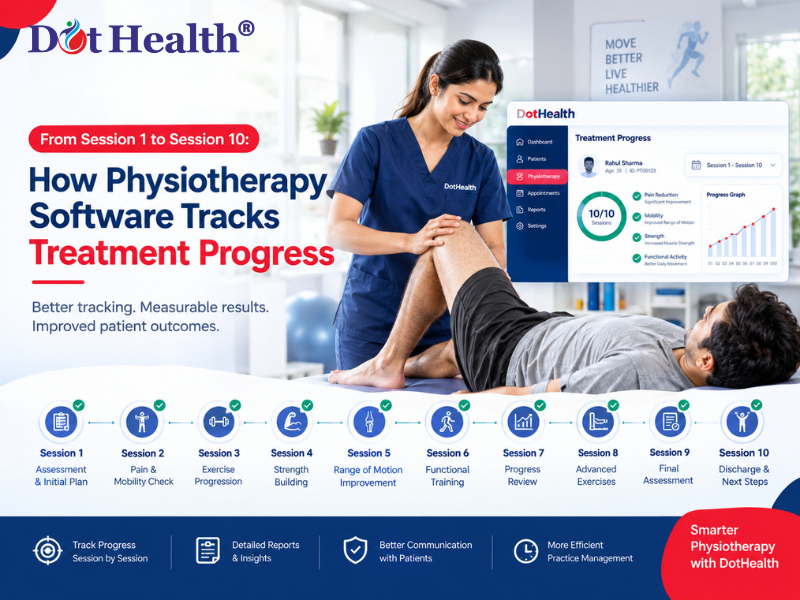
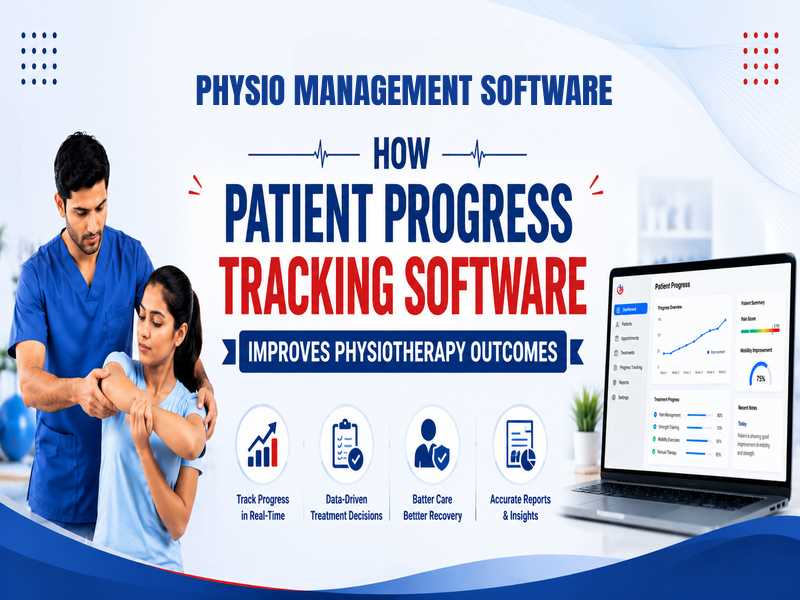
From Session 1 to Session 10: How Physiotherapy Software Tracks Treatment Progress
Introduction
Physiotherapy treatment is rarely limited to a single appointment. A patient may visit a physiotherapy clinic several times over a period of weeks or months, depending on the treatment plan and individual requirements. Each session can add new information to the patient's treatment history, including assessments, treatments, observations, progress measurements and follow-up details.
Managing all of this information manually can become difficult as the number of sessions increases. Therapists may need to review previous records before every appointment, while clinic staff need to maintain patient information, appointments, reports and billing details.
This is where physiotherapy software can support a more connected digital workflow. Instead of treating every appointment as a separate record, physiotherapy management software can help clinics maintain patient information and treatment records as an ongoing journey.
From Session 1 to Session 10, the objective is not simply to record that a patient attended an appointment. The objective is to maintain a connected history that makes previous assessments, treatments and progress information easier to review.
Why Session-Wise Tracking Matters in Physiotherapy
A physiotherapy patient may have several appointments for the same treatment plan. Current physiotherapy software solutions commonly focus on tracking treatment sessions, patient progress and records across a course of care rather than treating every visit as an isolated appointment.
For example, consider a patient who begins physiotherapy with an initial assessment.
During the first session, the therapist may record:
- Patient information
- Initial consultation details
- Assessment findings
- Treatment requirements
- Relevant documents
- Initial progress measurements
- Treatment plan
During subsequent sessions, the therapist can add new treatment information and compare it with the patient's earlier records.
A physiotherapy treatment tracking system therefore creates a timeline that can help the clinic understand what happened from the beginning of treatment through later sessions.
Session 1: Creating the Patient's Baseline Record
The first session establishes the starting point of the patient's treatment journey.
With physiotherapy patient management software, the clinic can create a digital patient profile containing relevant patient information, consultation details and documents.
The initial record can act as a baseline for future sessions.
Instead of searching through paper files every time the patient visits, the therapist can access the patient's digital record and review the information already available.
This gives the clinic a structured starting point for physiotherapy treatment management.
Session 2: Recording the First Treatment Updates
Once the initial assessment is completed, subsequent sessions can be added to the same patient record.
The therapist can record the treatment provided during the session along with relevant observations and updates.
This creates a continuous treatment history instead of multiple disconnected records.
For clinics managing several patients every day, maintaining this information through physiotherapy clinic management software can make it easier to review previous sessions before beginning the next appointment.
Session 3: Building a Connected Treatment History
By the third session, the patient already has multiple treatment records.
This is where the value of digital records becomes more visible.
Instead of maintaining separate files for every appointment, physiotherapy software can keep the patient's treatment information connected within the digital profile.
The therapist can review:
This connected history can provide a clearer overview of the patient's treatment journey.
Session 4: Reviewing Progress Against Previous Records
As treatment continues, reviewing previous information becomes increasingly important.
A patient progress tracking software workflow allows the therapist to refer back to earlier records while documenting the current session.
For example, relevant measurements or observations recorded during earlier sessions can be reviewed alongside newer information.
This does not replace the professional judgment of a physiotherapist. Instead, digital records provide organized information that can support the therapist's review of the treatment history.
Session 5: Maintaining Consistent Treatment Documentation
By the middle of a treatment course, manual documentation can become difficult to manage.
A patient may already have several consultation notes, treatment records and documents.
Physiotherapy management software provides a centralized environment where these records can remain connected to the patient's profile.
Consistent digital documentation can also make it easier for clinic staff to locate information when required.
For growing clinics, this becomes particularly useful when multiple therapists or staff members need access to relevant patient information according to their roles and permissions.
Session 6: Tracking Changes Over Time
The sixth session provides another opportunity to compare the patient's current information with earlier records.
Rather than looking at one appointment in isolation, the therapist can review the treatment journey over multiple sessions.
This is one of the important reasons why physiotherapy progress tracking is becoming an important part of digital physiotherapy workflows.
The software can help organize information such as:
The result is a more structured view of the patient's treatment history.
Session 7: Connecting Treatments With Patient Records
A treatment session should not exist separately from the patient's overall record.
With digital physiotherapy records, treatment information can remain associated with the patient's profile.
This means that when the patient returns for another session, the therapist can refer to previous information rather than starting from a blank record.
This connected approach can be particularly useful for patients undergoing longer treatment courses.
Modern physiotherapy software commonly positions session tracking and progress information as part of one continuous patient workflow.
Session 8: Generating a More Complete Treatment Picture
After several sessions, the accumulated information becomes a valuable treatment history.
The clinic can have a record covering the patient's journey from the initial assessment through multiple treatment sessions.
Physiotherapy treatment management software can help organize this information so that it is easier to review and use for documentation.
Reports can also bring together relevant information from the patient's digital record, depending on the software's reporting capabilities.
This can reduce the need to manually collect information from multiple files.
Session 9: Preparing for Follow-Up and Review
As the patient approaches the later stages of a treatment plan, previous records become useful for reviewing the journey so far.
The therapist can refer to earlier assessments, treatment details and progress information while documenting the current session.
This creates continuity between sessions.
For clinic administrators, having a centralized physiotherapy patient management system can also help maintain appointments, patient records, reports and billing information within the broader clinic workflow.
Session 10: Creating a Complete Treatment History
By Session 10, the patient may have accumulated a substantial digital treatment record.
Instead of having ten unrelated appointment entries, the clinic can maintain a connected timeline covering:
Initial Assessment → Consultation → Treatment Sessions → Progress Updates → Reports → Follow-Up
This is the major difference between simply recording appointments and maintaining a complete physiotherapy treatment history.
The final record can provide a useful reference for the clinic and therapist when reviewing the patient's treatment journey.
How Physiotherapy Software Supports Progress Tracking
A modern physiotherapy clinic management software platform can connect several parts of the clinic workflow.
1. Digital Patient Records
Patient information and treatment-related records can be stored digitally, making information easier to access when required.
2. Treatment History
Previous consultations and treatments can remain connected to the patient's profile.
3. Progress Analysis
Relevant progress measurements can be recorded and reviewed across multiple sessions, depending on the software's available features.
4. Reports
Digital reports can help organize information from the patient's treatment history.
5. Patient Documents
Important documents can be associated with the patient's digital record instead of being maintained separately.
6. Billing and Invoicing
Physiotherapy clinic software can also connect treatment workflows with billing and invoicing, helping clinics manage administrative information alongside patient records.
Why Digital Progress Tracking Is Useful for Growing Physiotherapy Clinics
For a small clinic with only a few patients, maintaining paper records may initially appear manageable.
As patient volume increases, however, the number of appointments and records also increases.
A digital physiotherapy management system can help clinics organize this information more consistently.
The benefits can include:
- Easier access to patient history
- Connected treatment records
- Better organization of session information
- Faster review of previous records
- Digital documentation
- Centralized reports
- Easier management of patient documents
- Better coordination between clinical and administrative workflows
The purpose is not to replace the physiotherapist's professional decision-making. Rather, the software provides an organized information system around the treatment process.
How DotHealth Supports Digital Physiotherapy Management
DotHealth Physiotherapy Management Software is designed to support the digital workflow of modern physiotherapy clinics.
The platform includes capabilities for consultations, invoices and billing, reports, patient document uploads, treatments and analysis. Its physiotherapy solution is designed to help clinics manage appointments, patient records, treatment information, progress-related analysis and billing through a connected system.
For example, DotHealth's analysis functionality can record patient-specific measurements and compare them with standard clinical norms, providing a structured way to maintain relevant progress information.
This makes the software suitable for clinics looking to move from disconnected paperwork toward a more organized digital physiotherapy workflow.
Conclusion
Physiotherapy is a journey that can involve multiple consultations and treatment sessions. When patient information is recorded separately at every appointment, maintaining a complete treatment history can become challenging.
Physiotherapy software provides a way to connect these sessions through digital patient records, treatment history, progress information, reports and billing.
From Session 1 to Session 10, every session can become part of one connected patient journey rather than an isolated appointment.
For physiotherapy clinics looking to manage patient records, treatments, progress analysis and administrative activities digitally, an integrated physiotherapy management software solution can provide a more organized foundation for day-to-day operations.
Frequently Asked Questions
What is physiotherapy software?
Physiotherapy software is a digital system designed to help physiotherapy clinics manage patient records, appointments, treatments, documentation, reports, billing and other clinic workflows.
How does physiotherapy software track patient progress?
It can maintain patient records and connect information from multiple treatment sessions, allowing relevant assessments, treatment details and progress measurements to be reviewed over time.
Why is session-wise tracking important in physiotherapy?
Physiotherapy commonly involves multiple sessions. Session-wise tracking helps maintain continuity between appointments and creates a more complete treatment history.
Can physiotherapy management software manage patient records?
Yes. Physiotherapy management software can maintain digital patient profiles containing relevant consultation information, treatment history, documents and reports.
Can physiotherapy software manage billing?
Many physiotherapy management platforms include billing and invoicing features, allowing administrative and treatment-related workflows to remain connected.
Is physiotherapy software useful for growing clinics?
Yes. As patient and appointment volumes increase, digital records can help clinics organize treatment information, patient documentation, reports and administrative workflows more efficiently.